

Every week, millions of families stare into a half-empty fridge at 5:30 p.m., wondering what to cook while a bag of wilting spinach quietly dies in the crisper drawer. The result? Expensive takeout, wasted groceries, and a nagging sense that dinner should not be this hard. Households waste 30-40% of their food, costing families $1,500 to $2,900 every year. That is real money leaving your kitchen untouched. This guide walks you through a simple, proven system for weekly dinner planning that cuts waste, saves money, and makes the dreaded “what’s for dinner?” question feel easy.
Table of Contents
Key Takeaways
| Point | Details |
|---|---|
| Cut food waste | Strategic dinner planning can reduce wasted food by up to 30 percent. |
| Save money every week | Families report spending $75–$150 less each week with planned shopping and meals. |
| Reduce mealtime stress | By planning ahead and building in flexibility, you can eliminate last-minute dinner dread. |
| Make the most of what you have | Smart plans help use up existing kitchen ingredients before they spoil. |
Why weekly dinner planning matters
Food waste is not just an environmental issue. It is a budget leak hiding in plain sight. When you buy groceries without a plan, you tend to overbuy, forget what you already have, and let perishables expire before you get to them. The cycle repeats every week, quietly draining your household budget.
Strategic ingredient-based planning can slash waste by 20 to 30 percent, which translates directly into savings at the checkout line. Beyond the financial benefit, having a dinner plan removes the daily mental load of deciding what to cook. When you already know Monday is pasta and Wednesday is stir-fry, you stop burning energy on decisions that eat into your evening.
Mealtimes become something your family actually looks forward to, rather than a nightly scramble. Planning also makes it easier to eat more variety, balance nutrition, and involve kids in choosing meals they will actually eat.
Here is a quick comparison of what unplanned versus planned weeks typically look like:
| Factor | No plan | With weekly plan |
|---|---|---|
| Food waste | High (30-40%) | Low (10-20%) |
| Weekly grocery spend | Unpredictable | Controlled |
| Dinner stress | Daily | Minimal |
| Leftover use | Rare | Consistent |
| Takeout frequency | 3-4x per week | 0-1x per week |
“Families that plan their weekly meals consistently report lower grocery bills, less food thrown away, and significantly less stress around dinnertime.”
The good news is that you do not need to be a professional chef or a spreadsheet enthusiast to make this work. Simple habits and the right tools, including AI dinner planning tools that generate recipes from what you already own, make the whole process faster than you think. Here is what to focus on:
-
Reduce impulse buying by shopping with a purpose-built list
-
Use what you have before buying more of the same
-
Rotate proteins and vegetables to keep meals interesting without overcomplicating things
-
Batch similar tasks so cooking feels less repetitive during the week
Step 1: Take inventory and set realistic goals
Before you write a single meal idea down, open your fridge, freezer, and pantry. This is the step most families skip, and it is exactly why they end up with three half-used jars of pasta sauce and no plan to use any of them.
Overbuying and forgetting perishables are the primary drivers of food waste at home. An inventory-first approach directly counters this by making you aware of what you already own before you spend another dollar.
Here is a simple example of what a weekly kitchen inventory might look like:
| Location | Item | Quantity | Use by |
|---|---|---|---|
| Fridge | Chicken thighs | 4 pieces | 2 days |
| Fridge | Bell peppers | 3 | 4 days |
| Freezer | Ground beef | 1 lb | Flexible |
| Pantry | Canned tomatoes | 2 cans | Long shelf life |
| Pantry | Pasta | 3 servings | Long shelf life |
Once you know what you have, set realistic dinner goals for the week. Be honest about your schedule. If Tuesday and Thursday are packed with activities, those nights need 20-minute meals, not slow-roasted dishes that require attention. Matching meal complexity to your actual week is what makes a plan stick.
Here is a simple process to follow:
-
Scan every storage area in your kitchen, not just the fridge
-
Note expiration dates and prioritize ingredients that need to be used soonest
-
Count how many dinners you actually need to cook this week versus order out
-
Match meal complexity to each night based on how much time you realistically have
-
Write your ingredient list before you even think about recipes
Pro Tip: Snap a quick photo of your fridge and pantry shelves before you go shopping. It takes ten seconds and prevents the classic mistake of buying something you already have at home. You can also use technology for planning to track your pantry automatically, so the inventory step becomes nearly effortless.
Setting goals also means deciding what “success” looks like for your week. For some families, that means cooking five nights from scratch. For others, it means cooking three nights and using leftovers twice. Both are valid. The goal is intention, not perfection.
Step 2: Plan meals and maximize overlap
With your inventory in hand and your goals set, it is time to pick your meals. The trick here is not just choosing recipes you like. It is choosing recipes that share ingredients, so you buy less and use more of what you already have.

For example, if you buy a head of cabbage, it can go into a Monday stir-fry, a Wednesday taco topping, and a Friday coleslaw. One ingredient, three meals, zero waste. This is called ingredient overlap, and it is one of the most powerful strategies in weekly dinner planning.
Hybrid preparation reduces mealtime chaos and waste by batching the basics, like cooking a big pot of grains or roasting a sheet pan of vegetables on Sunday, then assembling fresh meals each night. This approach gives you the efficiency of batch cooking without the monotony of eating the same thing five days in a row.
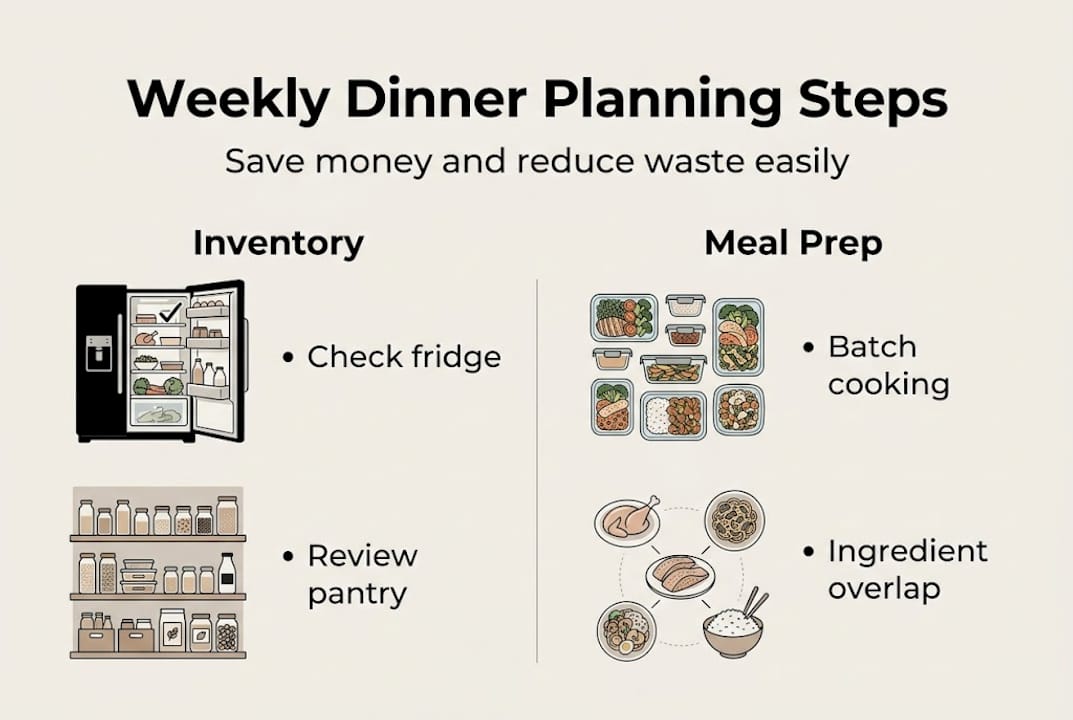
Here is how classic planning compares to a tech-assisted approach:
| Approach | Time to plan | Ingredient overlap | Flexibility | Waste reduction |
|---|---|---|---|---|
| Manual planning | 30-60 min | Moderate | Low | Moderate |
| AI-assisted planning | 5-10 min | High | High | High |
A few strategies that make meal overlap work in practice:
-
Anchor each week around 2-3 key proteins and build meals outward from there
-
Use versatile vegetables like onions, garlic, and bell peppers that work across cuisines
-
Plan at least one flex night for takeout, leftovers, or a spontaneous pantry meal
-
Keep one or two “emergency meals” on your list that use only pantry staples
Pro Tip: Plan your most perishable ingredients into the first half of the week and save pantry-heavy or freezer meals for Thursday and Friday. This simple sequencing prevents a lot of last-minute waste.
Automated meal plan generators can do this ingredient-matching work for you instantly, which is especially useful when you are staring at a random collection of leftovers and have no idea what to cook.
Step 3: Build your shopping list and prep efficiently
Once your meal plan is set, translating it into a focused grocery list is straightforward. The key is to buy only what your plan requires, minus what you already have in your inventory. This sounds obvious, but it is the step that separates families who save money from those who do not.
Here is a step-by-step process for building a smart shopping list:
-
List every ingredient needed across all planned meals
-
Cross-reference your inventory and remove anything you already have
-
Group items by store section (produce, dairy, proteins) to speed up your shopping trip
-
Add quantities so you buy exactly what you need, not a vague “some chicken”
-
Review before checkout and ask whether each item connects to a specific meal
“Smart shopping lists built from your meal plan and pantry inventory are one of the most effective tools for cutting grocery costs and reducing waste at home.”
Apps and tools can create these smart shopping lists automatically based on your meal plan and what you already have, saving you 15 to 20 minutes of manual list-building every week.
Once you are back from the store, spend 30 to 45 minutes on basic prep. Chop vegetables, marinate proteins, cook a batch of rice or quinoa. This upfront investment pays back every single night when dinner comes together in half the time.
Pro Tip: Use AI-generated grocery lists that sync directly with your meal plan. When you swap a meal or add a new recipe, the list updates automatically, so nothing falls through the cracks.
The families who stick to their dinner plans long-term are not the ones with the most discipline. They are the ones who made the process easy enough to repeat without thinking too hard about it.
Troubleshooting: Flexible solutions for real-life hiccups
Even a well-built plan will hit a wall sometimes. Someone stays late at work. A kid refuses the meal you planned. An ingredient goes bad before you get to it. This is normal, and a good dinner planning system accounts for it from the start.
Flexibility prevents planning failure. The families who quit meal planning usually do so because one bad week felt like proof the whole system did not work. The real fix is building flexibility into the plan itself, not trying to execute it perfectly.
Here are practical ways to stay on track when things go sideways:
-
Swap meals within the week rather than abandoning the plan entirely. If Wednesday’s dinner moves to Friday, that is fine.
-
Keep a short list of 10-minute pantry meals you can fall back on: pasta with olive oil and garlic, eggs and toast, or canned soup with bread
-
Transform leftovers instead of reheating them as-is. Last night’s roasted chicken becomes today’s chicken tacos or a quick fried rice
-
Use your freezer as a buffer. When you have extra cooked grains or proteins, freeze them for exactly these moments
-
Embrace the flex night as a feature, not a failure. One night of takeout or a simple pantry meal is part of a sustainable plan
Pro Tip: Always plan for at least one night per week where dinner is leftovers or a simple pantry meal. This built-in buffer absorbs schedule changes without derailing your whole week.
Leftover transformation is one of the most underused skills in home cooking. A roasted vegetable medley from Tuesday can become a frittata on Thursday. Cooked lentils can turn into a soup or a grain bowl topping. Thinking of leftovers as ingredients rather than finished meals changes everything.
Our perspective: What most planners get wrong about weekly dinners
Here is something we have noticed: most families who try weekly dinner planning and quit do not fail because they lack motivation. They fail because they built a plan that required everything to go right.
The most effective dinner planners we have seen are not the most organized. They are the most adaptable. They design their week with intentional gaps, ingredient overlap, and at least one night that requires zero effort. They treat leftovers as a resource, not a consolation prize.
Perfect execution is overrated. A plan you follow 80 percent of the time beats a perfect plan you abandon by Wednesday. The mindset shift that actually sticks is this: planning is not about controlling every meal. It is about reducing the number of decisions you have to make under pressure.
Technology helps, but it is not the whole answer. The best tool is one you will actually use consistently. Whether that is a whiteboard on your fridge or simple weekly dinner solutions that do the planning for you, what matters is that it fits your life, not the other way around.
Make dinner planning easy with smart tools
If building a weekly dinner plan from scratch still sounds like a lot of work, you do not have to do it alone.
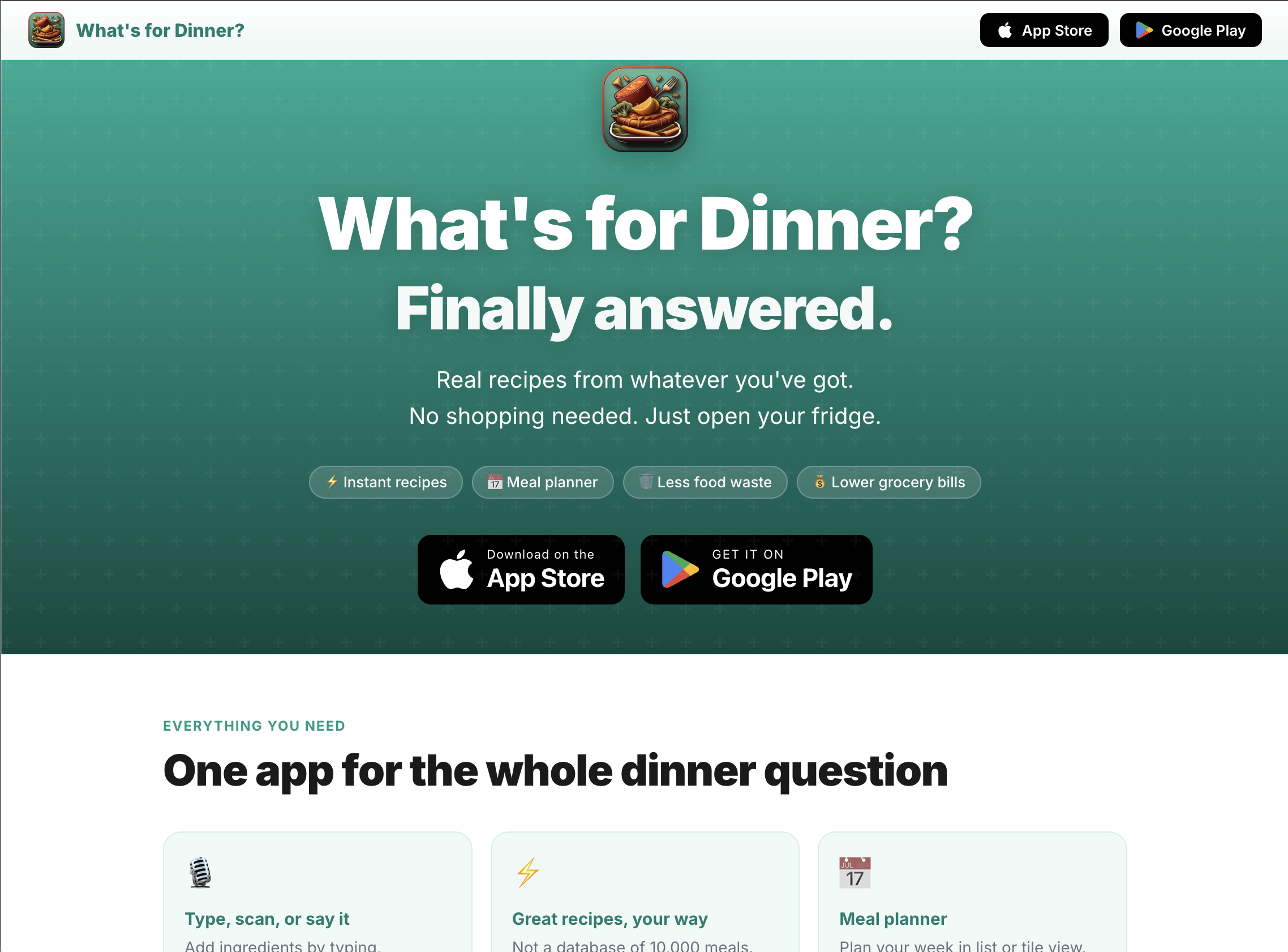
The What’s for Dinner? app takes everything covered in this guide and automates it. You tell it what ingredients you have using voice, barcode scanning, or typing, and it generates personalized recipes instantly. The built-in meal planner schedules your week, the smart grocery list updates as you plan, and the pantry tracker keeps your inventory current without extra effort. It is designed for busy households that want real solutions, not more complexity. Try it and see how much easier your next dinner week can be.
Frequently asked questions
How much money can I realistically save by planning weekly dinners?
Families commonly save $75 to $150 a week and reduce annual food waste by hundreds to thousands of dollars. Strategic planning consistently delivers measurable savings compared to unplanned grocery shopping.
What’s the best way to start planning weekly dinners if I have picky eaters?
Focus on ingredient overlap and choose flexible base ingredients, then rotate favorite proteins or sides for variety. Hybrid prep strategies make it easy to customize each plate without cooking separate meals.
How do I handle dinner planning if our schedule changes unexpectedly?
Include one flex night every week and keep a short list of easy pantry meals you can fall back on. Flexibility built into your plan is what keeps you from abandoning it when life gets unpredictable.
Are there tools or apps that make weekly dinner planning easier?
Yes, AI-driven planners like What’s for Dinner? turn your inventory and preferences into ready-made meal plans and shopping lists. Automated planning tools cut planning time from an hour to under ten minutes.